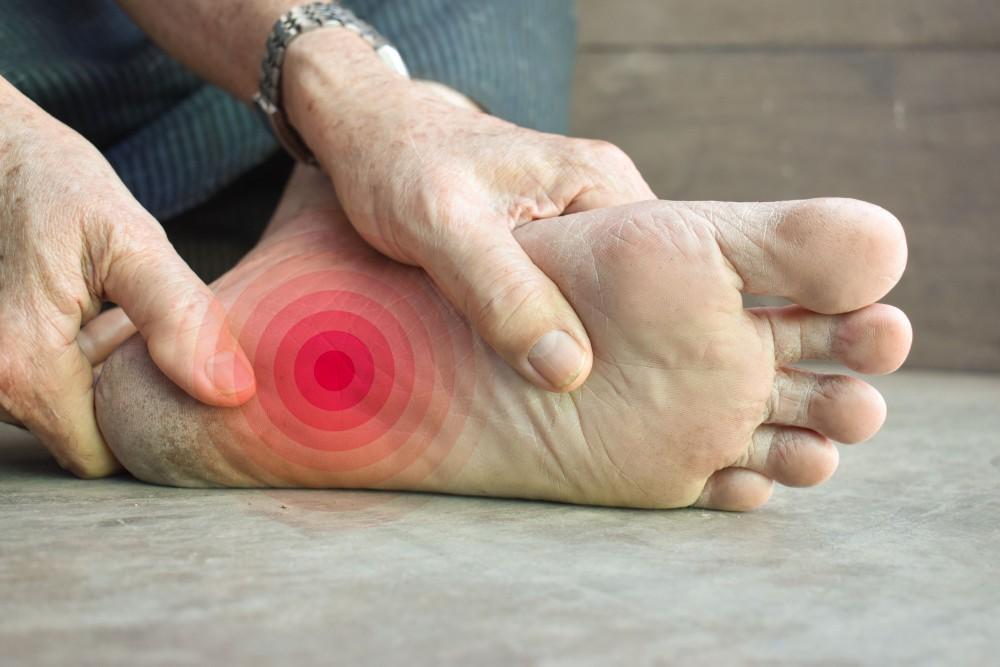
If your first steps out of bed feel like a sharp, stabbing pain in your heel, you are not alone.
First-step heel pain is a common symptom of plantar fasciitis, a condition affecting the thick band of tissue that supports your arch. At Concord Podiatry, David E. Biss, DPM, provides nonsurgical care to help people in Concord and Plymouth, New Hampshire, manage heel pain and improve mobility.
The sharp pain happens because this tissue tightens up while you sleep. When you stand, your arch suddenly flattens and pulls on your heel.
We always start with conservative treatment. Here are five:
1. Targeted stretching
Sitting on the edge of your bed and stretching your arch before standing is a highly effective way to reduce morning pain.
To do this, cross your affected leg over your knee and pull your toes back toward your shin. This simple movement prepares the tissue for weight-bearing. At Concord Podiatry, we teach you the exact stretching techniques to protect your heel.
2. Supportive orthotics
Dr. David E. Biss can fit you for custom orthotics that improve not only your foot function but also your overall well-being.
These inserts support your arch and reduce daily strain on the tissue. Dr. Biss can evaluate your feet, ankles, and gait and determine whether orthotics may be appropriate for your needs. Concord Podiatry also offers custom orthotics when indicated.
3. Night splints
A night splint is a wearable device that gently holds your foot at a neutral angle while you sleep. This prevents the tissue from contracting and tightening overnight.
When you wake up, the tissue is already elongated, making your first steps much more comfortable. Our team can fit you with a lightweight night splint that fits your lifestyle.
4. Foot taping
Applying rigid athletic tape to your foot is another excellent way to stabilize the arch. This technique supports the ligament and mimics your foot's natural structure.
Taping provides immediate relief when you walk. We offer professional taping during your visits to help keep you active and comfortable.
5. Manual therapy
Hands-on manual therapy, such as joint mobilization of the ankle and rear foot, reduces stress on the plantar fascia during walking. Manual therapy is usually most effective as part of a larger plan that includes exercise, education, and gradual return to activity.
Healing plantar fasciitis takes time and consistent care. If morning heel pain is keeping you from enjoying your favorite activities, we are here to help. Schedule a consultation with Concord Podiatry today to start your personalized treatment plan.